DE-MAN ROGOSA SHARPE AGAR (MRS AGAR) | HX-MEDIA
Product Overview
De-Man Rogosa Sharpe (MRS) Agar is a highly nutritious and selective culture medium specifically formulated for the isolation, cultivation, enumeration, and maintenance of Lactobacillus species and other lactic acid bacteria (LAB). Developed by De Man, Rogosa, and Sharpe, this medium has become the international standard for the cultivation of lactic acid-producing microorganisms due to its ability to provide optimal nutritional and environmental conditions for their growth.
MRS Agar is widely used in food microbiology, dairy industries, probiotic manufacturing, pharmaceutical quality control, biotechnology, fermentation research, and academic laboratories. The medium is particularly valuable for isolating and studying beneficial microorganisms that play a crucial role in food fermentation, probiotic formulations, gut health research, and industrial biotechnology processes.
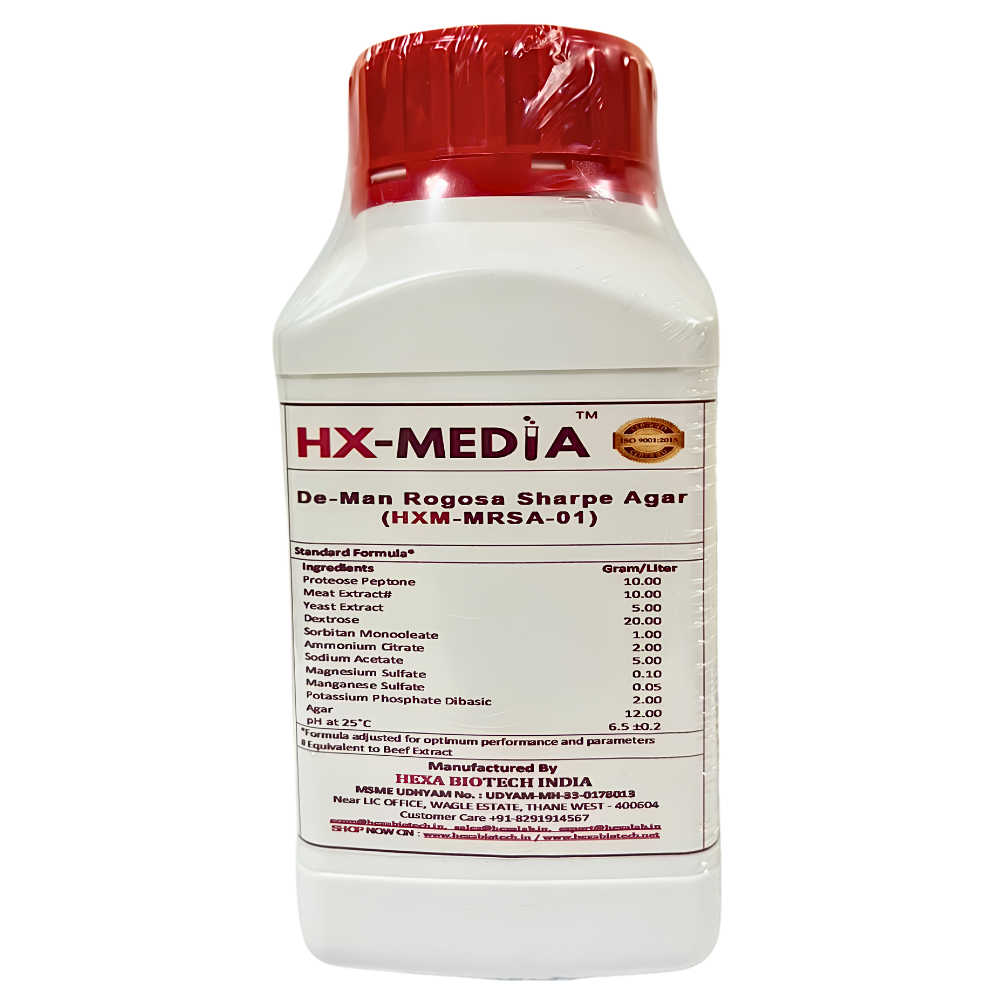
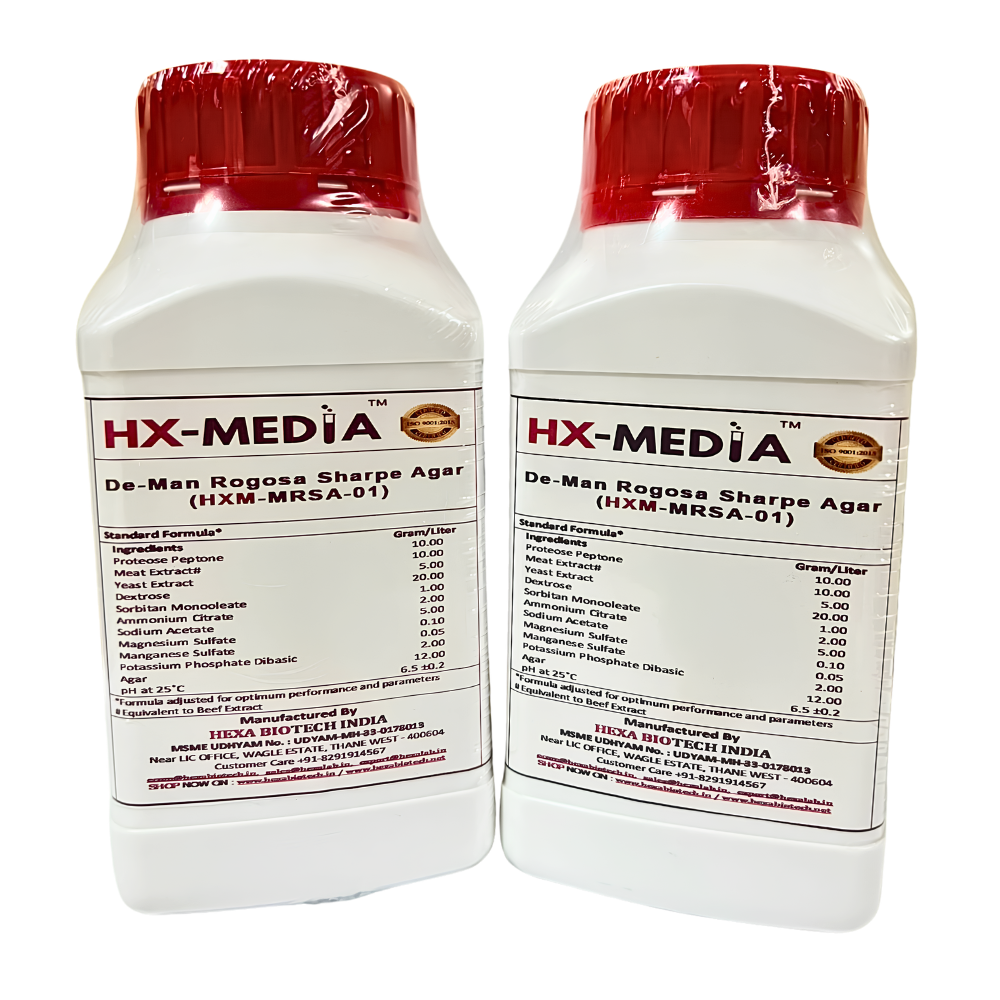
The formulation contains a carefully balanced combination of proteose peptone, beef extract, yeast extract, glucose, polysorbate 80, sodium acetate, ammonium citrate, magnesium sulfate, manganese sulfate, and agar. These ingredients provide a rich supply of amino acids, peptides, vitamins, minerals, trace elements, fatty acids, and fermentable carbohydrates necessary for vigorous bacterial growth and metabolic activity.
One of the distinguishing characteristics of MRS Agar is its ability to support the growth of fastidious lactic acid bacteria while suppressing many competing microorganisms. Sodium acetate and ammonium citrate act as selective agents that inhibit the growth of several undesirable bacteria, thereby enhancing the recovery of target organisms. Polysorbate 80 supplies fatty acids required for cell membrane synthesis and improves the growth of nutritionally demanding strains.
The medium supports the growth of a wide range of lactic acid bacteria including:
- Lactobacillus species
- Lactococcus species
- Pediococcus species
- Leuconostoc species
- Streptococcus thermophilus
- Other probiotic and fermentative bacteria
MRS Agar is extensively employed in the analysis of:
- Dairy products
- Yogurt and fermented milk products
- Probiotic supplements
- Fermented foods and beverages
- Nutraceutical products
- Functional foods
- Environmental and industrial fermentation samples
The medium promotes excellent colony development, allowing clear observation of colony size, morphology, texture, pigmentation, and growth characteristics. This makes it highly suitable for microbial enumeration, strain isolation, purity checking, and quality control testing.
MRS Agar is commonly used for:
- Isolation of lactic acid bacteria from food samples
- Enumeration of probiotic microorganisms
- Starter culture development and maintenance
- Fermentation process monitoring
- Quality control testing in food and dairy industries
- Research on probiotic and beneficial bacteria
- Preservation and subculturing of bacterial strains
- Academic teaching and microbiological studies
The rich nutrient composition promotes rapid bacterial multiplication and high cell yields, making the medium ideal for both routine laboratory testing and advanced microbiological research. Its consistent performance ensures reliable and reproducible results across different applications.
Advantages of MRS Agar
- Highly nutritious medium for lactic acid bacteria
- Excellent recovery of fastidious probiotic organisms
- Selective formulation reduces interference from competing microorganisms
- Supports vigorous growth and acid production
- Promotes distinct colony morphology
- Suitable for enumeration and isolation studies
- Widely accepted in international microbiological standards
- Reliable and reproducible performance
- Ideal for food, dairy, pharmaceutical, and research applications
Due to its exceptional nutritional richness, selective properties, and proven effectiveness in supporting the growth of lactic acid bacteria, De-Man Rogosa Sharpe (MRS) Agar remains one of the most important and widely used microbiological media for probiotic research, dairy microbiology, fermentation technology, quality control testing, and industrial microbiological applications worldwide.
🔬 Key Features
- Selective medium for isolation and cultivation of lactic acid bacteria (LAB)
- Supports excellent growth of Lactobacillus species
- Rich nutritional composition for fastidious microorganisms
- Promotes good colony development and recovery
- Suitable for enumeration of probiotic bacteria
- Enhances acid production and fermentation activity
- Reliable and reproducible performance
- Widely used in dairy, food, and probiotic microbiology
🎯 Applications
- Isolation and cultivation of Lactobacillus species
- Enumeration of lactic acid bacteria in food and dairy products
- Probiotic research and quality control
- Fermentation studies and starter culture development
- Microbiological analysis of fermented foods
- Pharmaceutical and biotechnology research
- Academic and industrial microbiology laboratories
- Maintenance of pure cultures of lactic acid bacteria
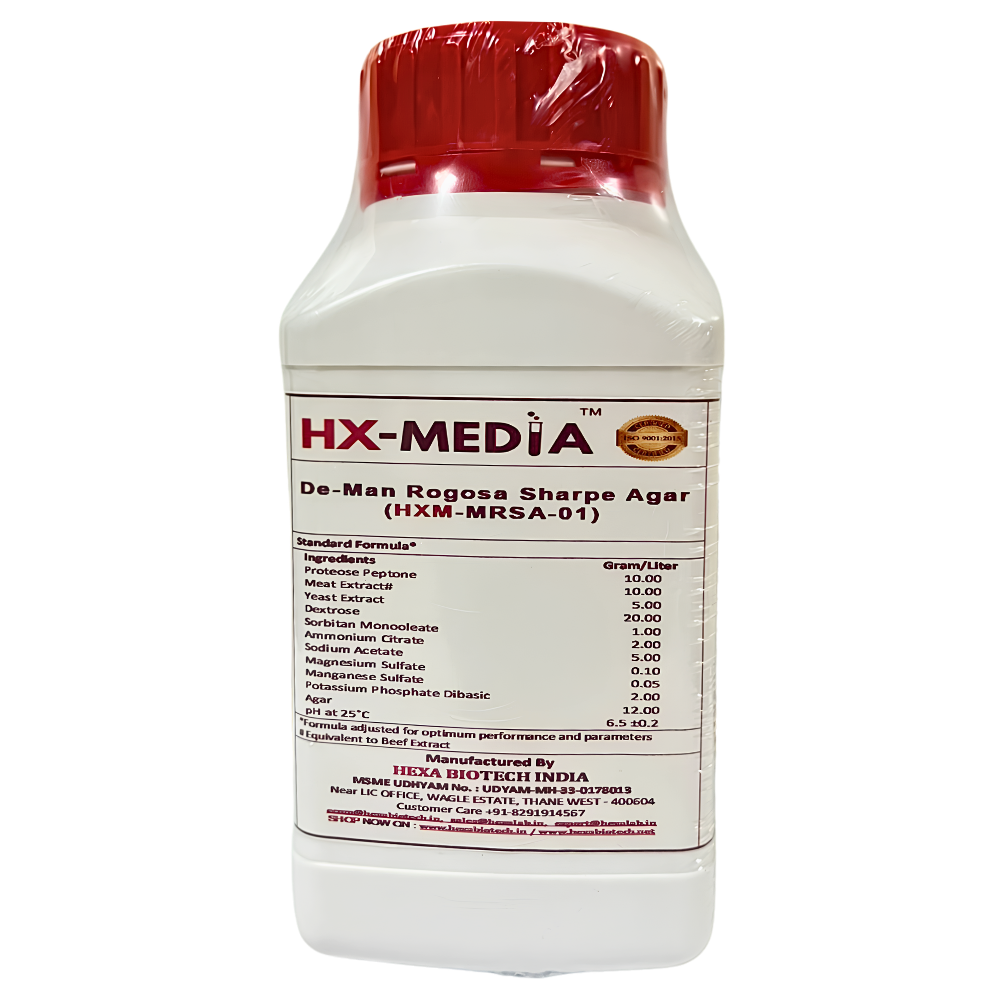
🧪 Composition (Typical)
| Component |
Quantity (g/L) |
| Proteose Peptone |
10.0 |
| Beef Extract |
10.0 |
| Yeast Extract |
5.0 |
| Dextrose |
20.0 |
| Sodium Acetate |
5.0 |
| Triammonium Citrate |
2.0 |
| Dipotassium Phosphate |
2.0 |
| Magnesium Sulfate |
0.1 |
| Manganese Sulfate |
0.05 |
| Polysorbate 80 |
1.0 |
| Agar |
15.0 |
Final pH: 6.5 ± 0.2 at 25°C
🛠️ How to Use
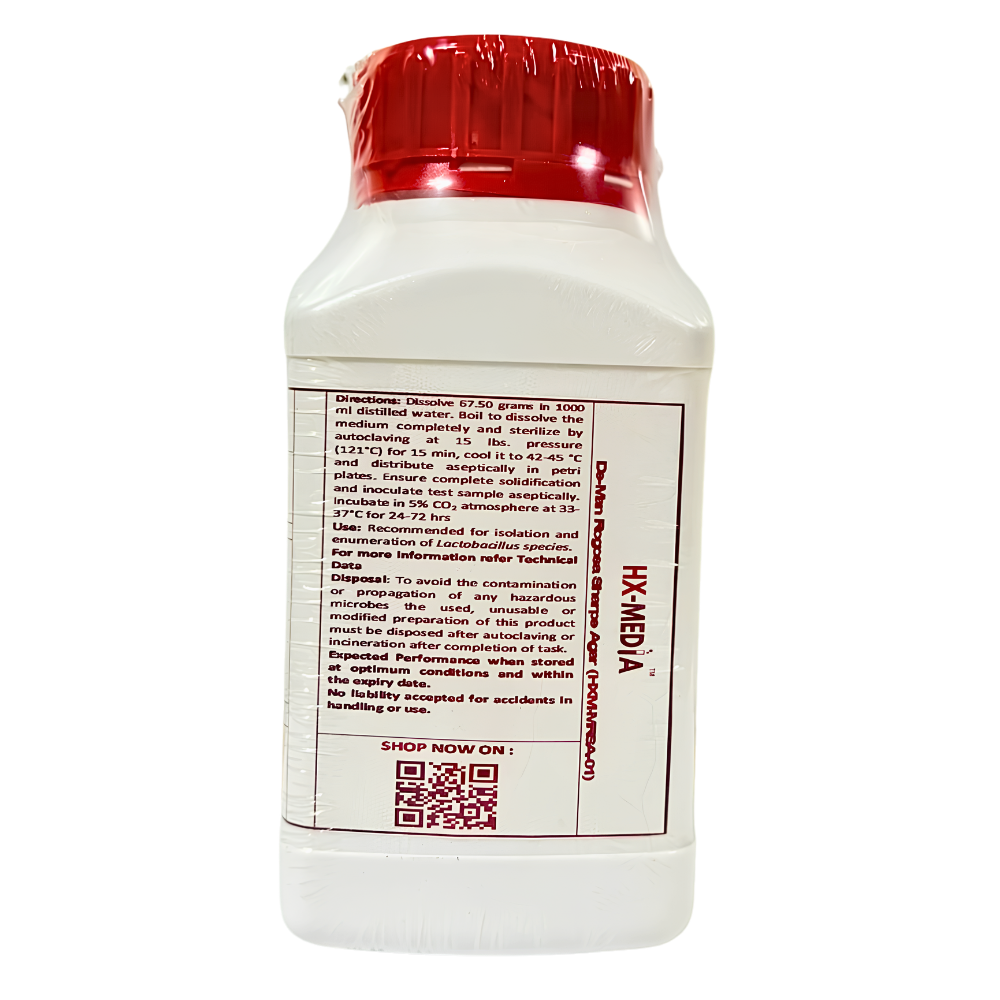
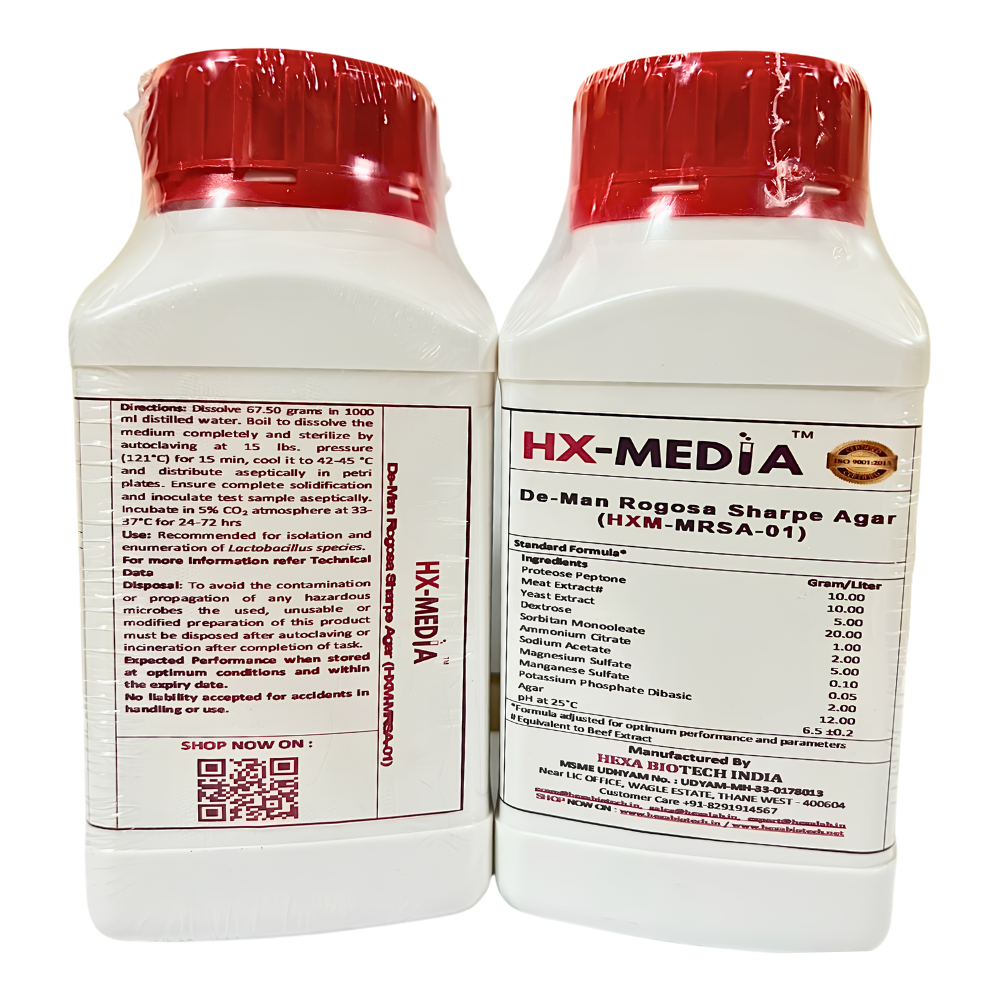
- Suspend the required quantity of MRS Agar in distilled or purified water.
- Heat with frequent stirring until the medium dissolves completely.
- Sterilize by autoclaving at 121°C for 15 minutes.
- Cool the medium to 45–50°C and pour into sterile Petri plates.
- Allow the medium to solidify.
- Inoculate the sample using standard microbiological techniques.
- Incubate at the recommended temperature, typically 30–37°C, for 24–72 hours.
- Observe colony growth and perform further identification if required.
⏳Storage and Shelf Life
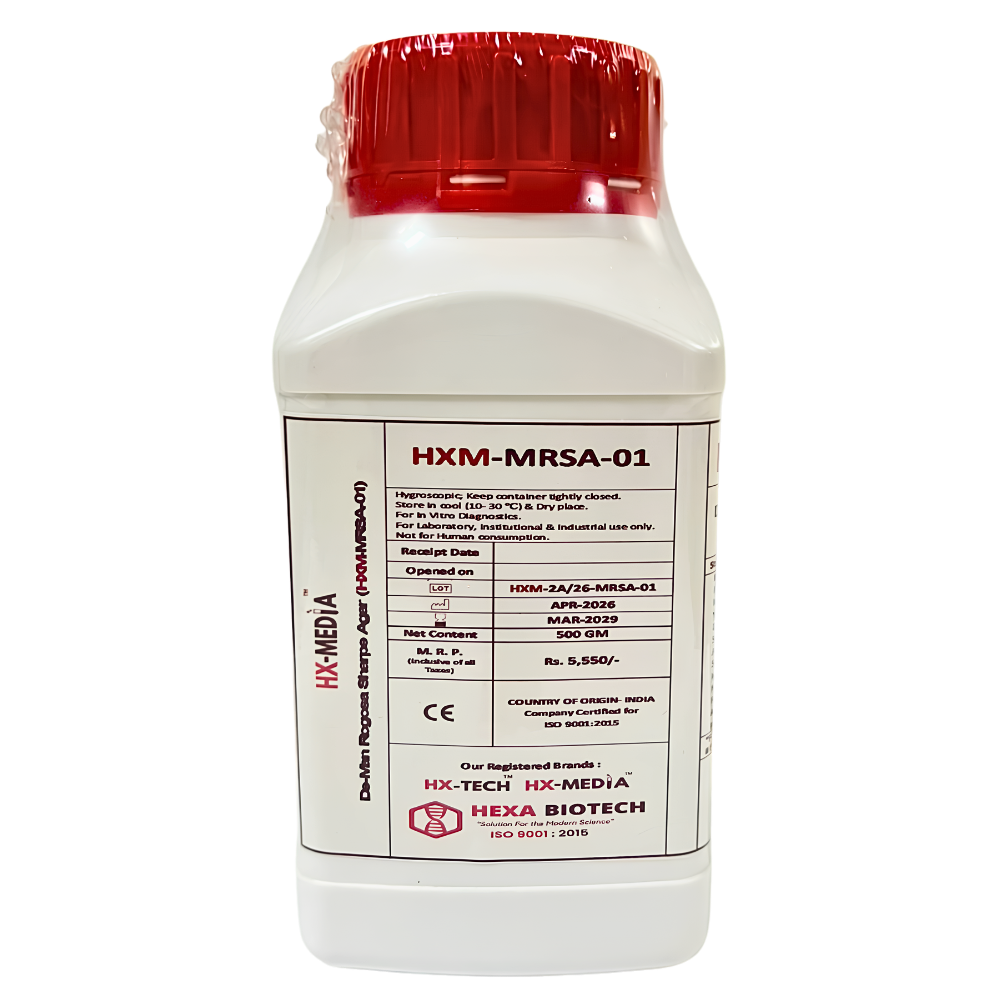
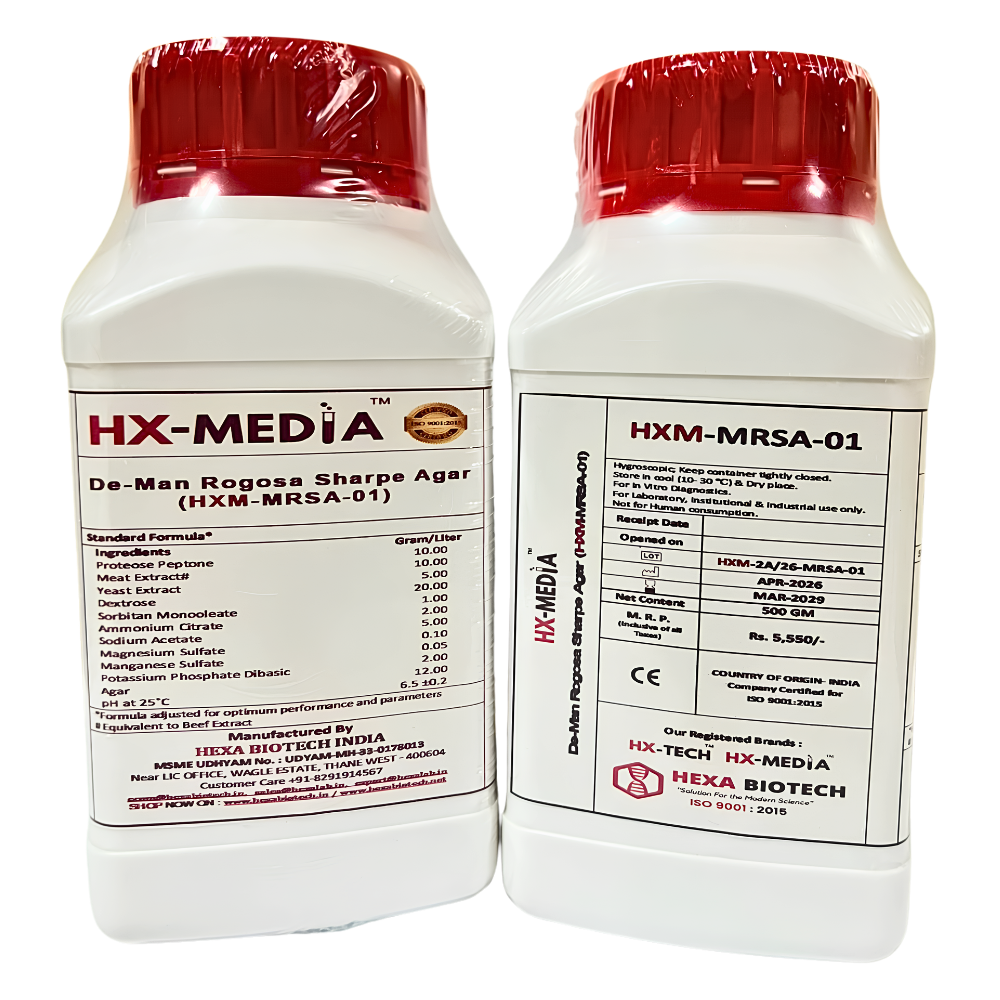
- Store the dehydrated medium in a cool, dry place away from direct sunlight.
- Keep the container tightly closed after use.
- Recommended storage temperature: 10–30°C.
- Protect from moisture and contamination.
- Prepared plates should be stored refrigerated at 2–8°C and used within the recommended period.
- Use before the expiry date stated on the product label.
👍 Ideal For
✔ Dairy microbiology laboratories
✔ Probiotic manufacturers
✔ Food and beverage industries
✔ Fermentation and biotechnology laboratories
✔ Pharmaceutical microbiology laboratories


Reviews
There are no reviews yet.