
₹2,040.00 – ₹74,800.00Price range: ₹2,040.00 through ₹74,800.00
BEA contains bile salts that act as a selective agent, allowing enterococci and group D streptococci to grow while inhibiting many others.
Esculin is hydrolyzed by organisms that produce esculinase, producing esculetin.
Esculetin reacts with ferric ions (from ferric citrate in the medium) to form a dark brown to black complex.
Blackening of the medium is considered a positive bile esculin test
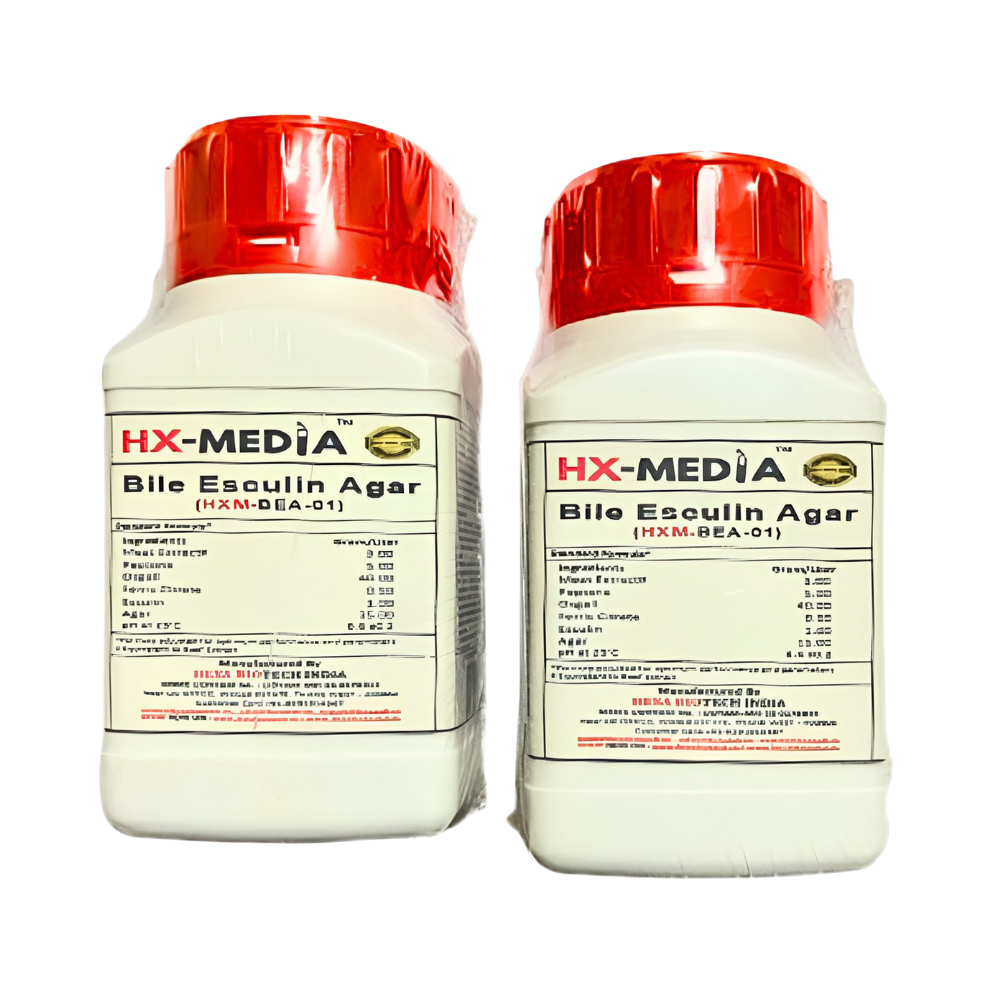
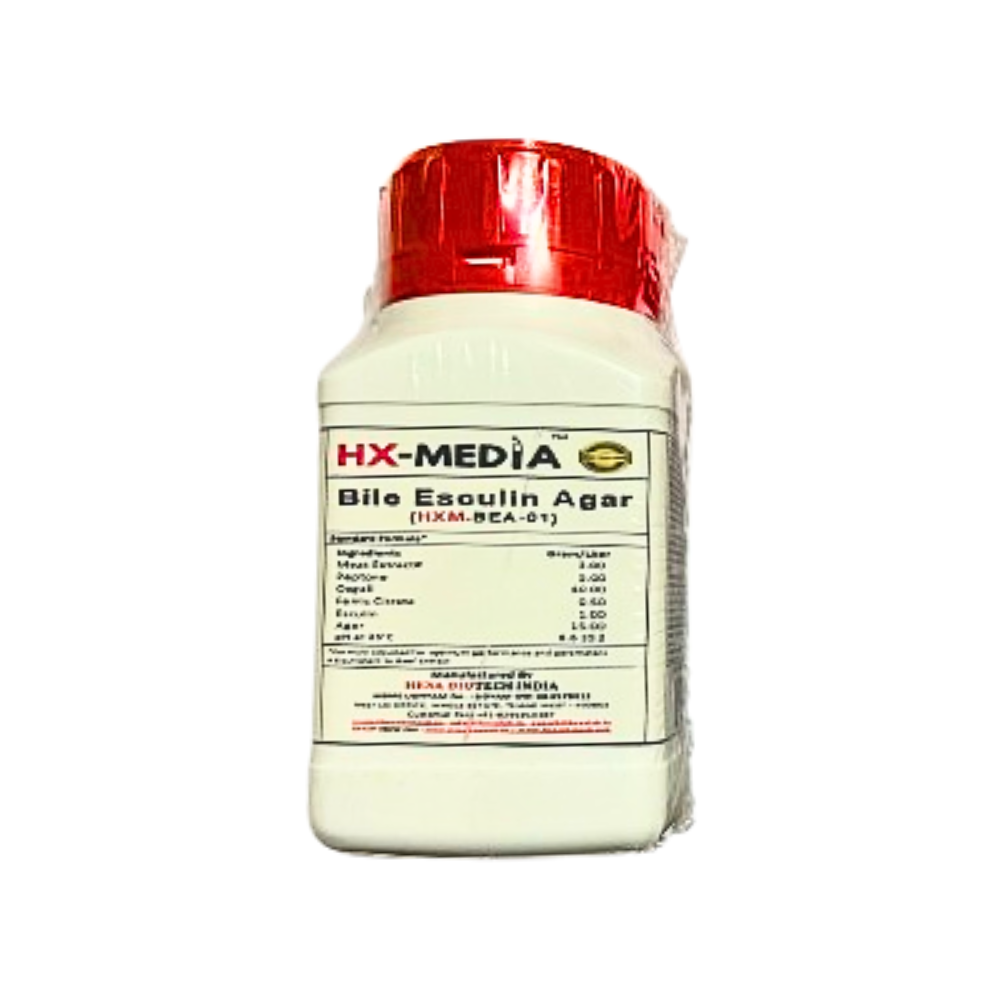
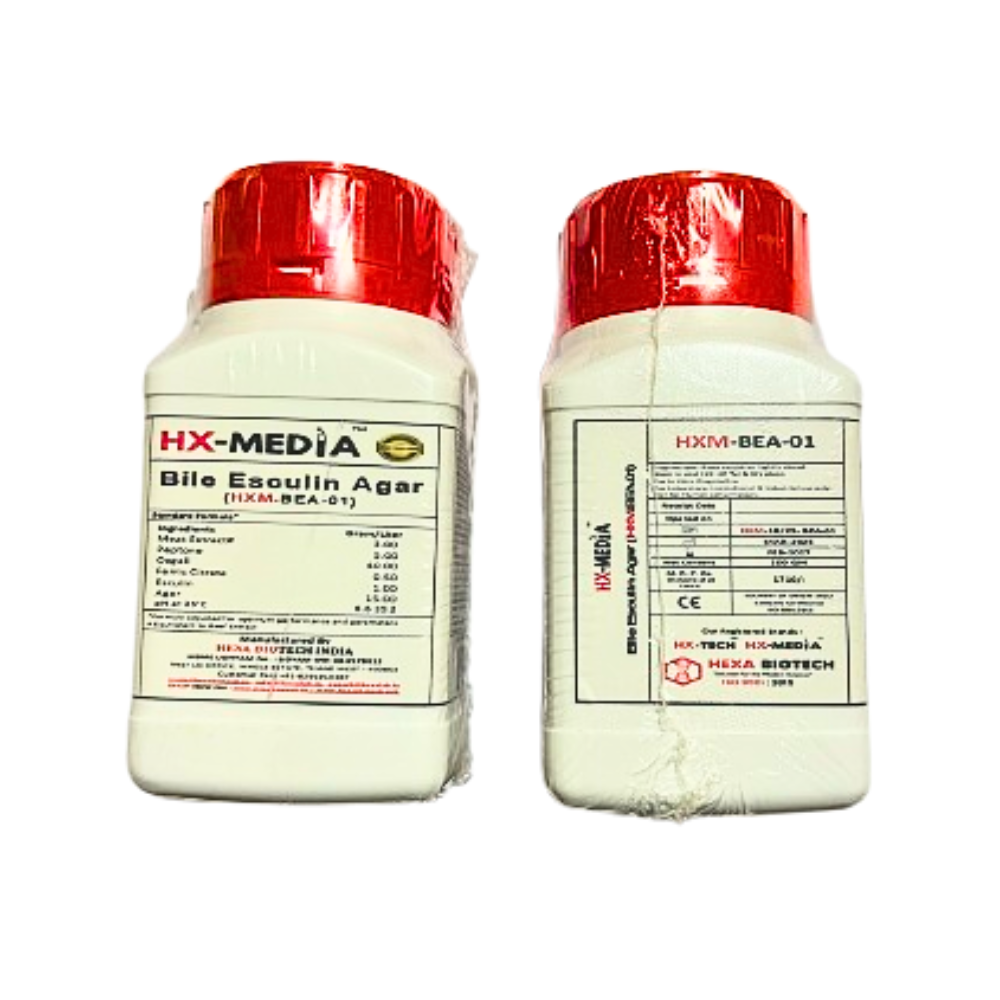
100 g Bottle (makes ~1.5–2 liters of medium)
500 g Lab Pack
1 kg Bulk Pack
(Custom sizes available depending on supplier.)
Bile Esculin Agar is a selective and differential culture medium used for the isolation and identification of Group D streptococci and Enterococci, particularly Enterococcus faecalis. The medium contains bile salts, which inhibit most Gram-positive bacteria other than enterococci, making it selective.
It also contains esculin and ferric citrate. Organisms capable of hydrolyzing esculin produce esculetin, which reacts with ferric ions to form a dark brown to black complex, resulting in characteristic blackening of the medium.
Bile Esculin Agar is widely used in clinical diagnostics, water testing, and food microbiology laboratories for the presumptive identification of enterococci and differentiation from other streptococci. It provides clear visual results, high selectivity, and reliable performance, making it essential for routine microbiological analysis.
Selective for enterococci and Group D streptococci
Differential through esculin hydrolysis and blackening. Clear, easy-to-read reaction
Reliable for confirming bile-tolerant, esculin-positive organisms
Bile Esculin Agar Fits clinical, food, water, and environmental testing workflows
Isolation and identification of Enterococcus spp.
Differentiation of Group D streptococci from other streptococci
Confirmation of enterococcal presence in clinical, food, water, and environmental samples
Selective plating following enrichment procedures
Peptone (6 g) – nutrient source
Bile Salts (20 g) – selective inhibitor
Esculin (1 g) – differential substrate
Ferric Ammonium Citrate (0.5 g) – blackening indicator
Agar (15 g) – solidifying agent
Distilled Water (1 L)
Final pH: 6.6 ± 0.2
Streak specimen or inoculate plate using standard aseptic technique.
Incubate at 35–37 °C for 18–24 hours.
Positive reaction: brown to black coloration in the medium around colonies.
Negative reaction: no darkening; medium remains unchanged.
✔ Identifying Enterococcus spp.
✔ Differentiating Group D streptococci
✔ Isolating bile-tolerant, esculin-positive bacteria
✔ Screening food, water, and clinical samples
✔ Teaching labs (clear blackening reaction)
| Weight | N/A |
|---|---|
| Dimensions | N/A |
| Size | 100G, 10KG, 1Kg, 500G, 5KG |

₹820.00 – ₹57,440.00Price range: ₹820.00 through ₹57,440.00

₹690.00 – ₹61,280.00Price range: ₹690.00 through ₹61,280.00

₹905.00 – ₹68,960.00Price range: ₹905.00 through ₹68,960.00

₹6,715.00 – ₹59,505.00Price range: ₹6,715.00 through ₹59,505.00



Reviews
There are no reviews yet.