
₹1,145.00 – ₹9,200.00Price range: ₹1,145.00 through ₹9,200.00
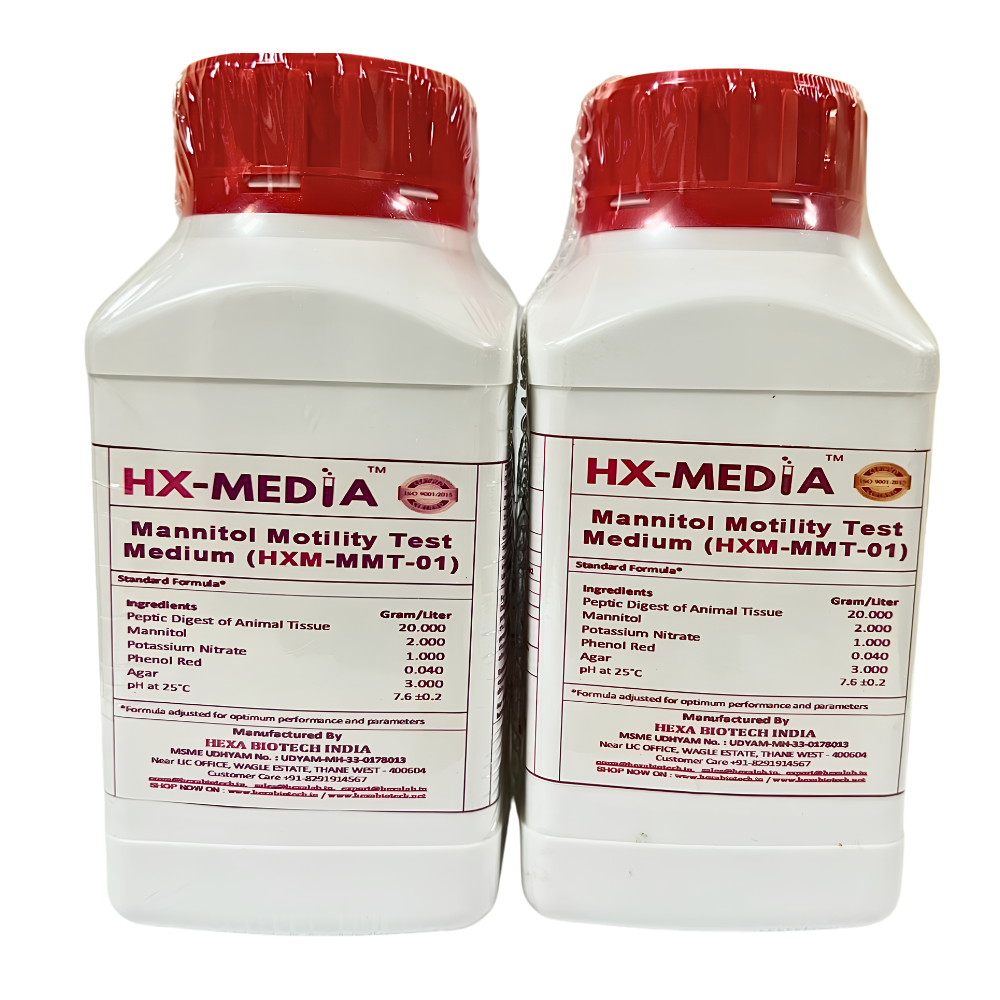
Mannitol Motility Test Medium is based on the ability of microorganisms to ferment mannitol and exhibit motility in a semi-solid medium. Mannitol serves as the fermentable carbohydrate source, while peptones provide essential nutrients required for bacterial growth. Organisms capable of fermenting mannitol produce acid during metabolism, causing the pH indicator in the medium to change color, indicating a positive fermentation reaction.
The low agar concentration creates a semi-solid environment that allows motile bacteria to move away from the line of inoculation. Motile organisms produce diffuse growth throughout the medium, whereas non-motile organisms remain confined to the stab line. The combined observation of carbohydrate fermentation and bacterial movement provides a simple and effective method for the differentiation and identification of bacterial species, particularly members of the Enterobacteriaceae and other Gram-negative bacteria.
100 g Bottle (makes ~1.5–2 liters of medium)
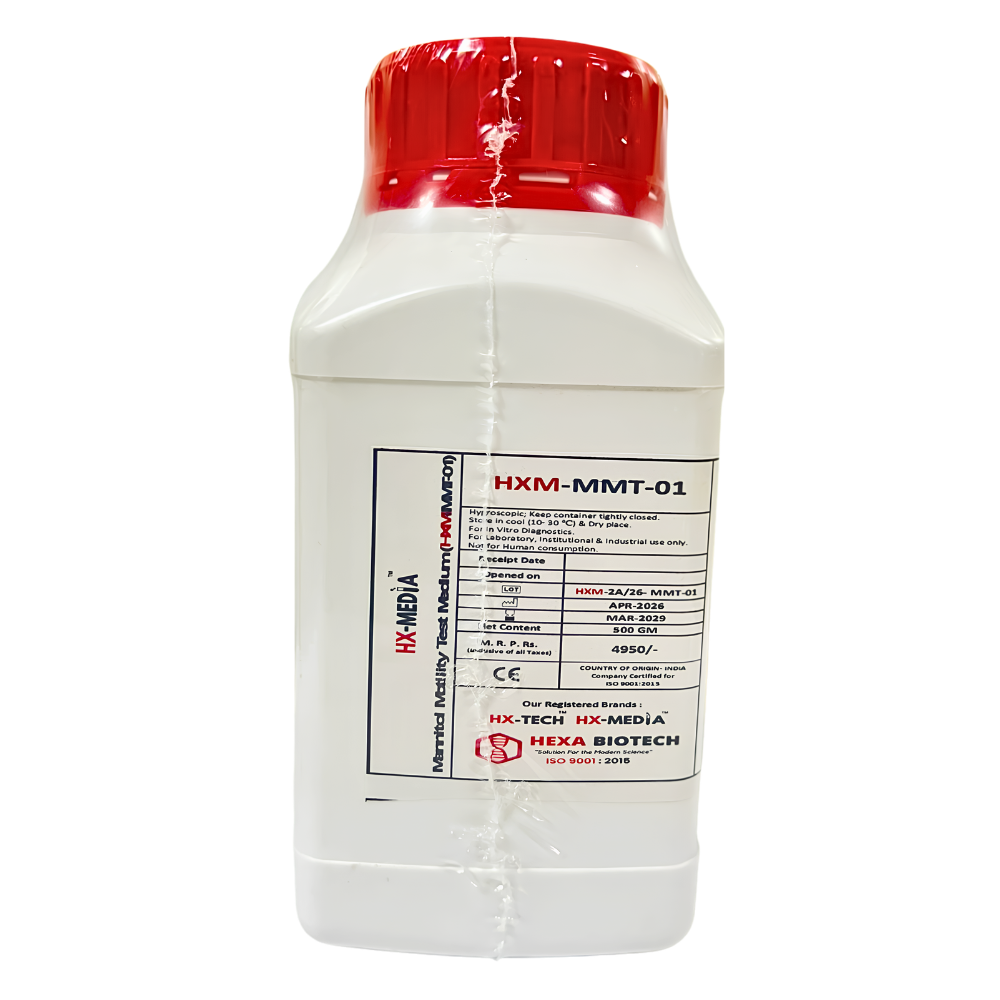
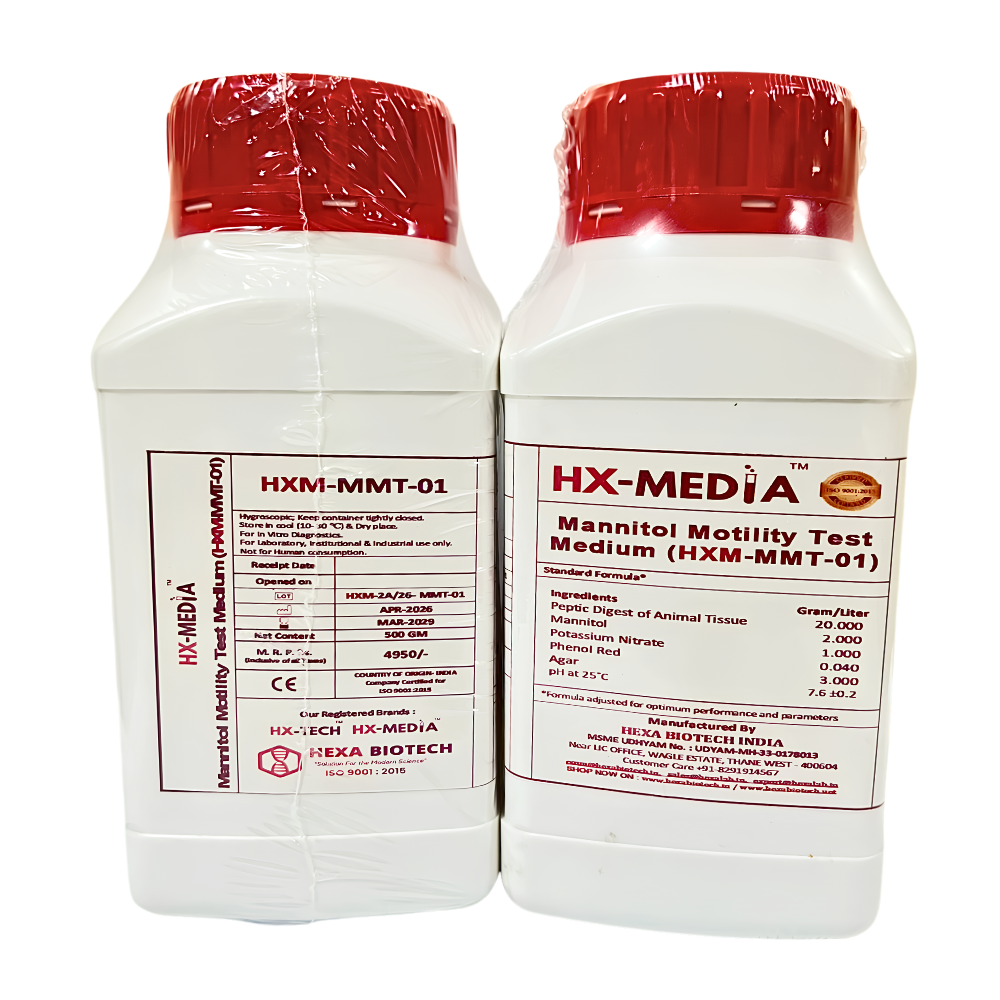
500 g Lab Pack
1 kg Bulk Pack
(Custom sizes available depending on supplier.)
Mannitol Motility Test Medium is a semi-solid differential culture medium specifically formulated for the simultaneous determination of bacterial motility and mannitol fermentation. The medium serves as an important diagnostic tool in microbiology laboratories, enabling the evaluation of two key physiological characteristics of microorganisms in a single test system. It is widely used in clinical diagnostics, pharmaceutical quality control, food microbiology, water testing, veterinary microbiology, and research laboratories for the identification and differentiation of bacterial isolates.
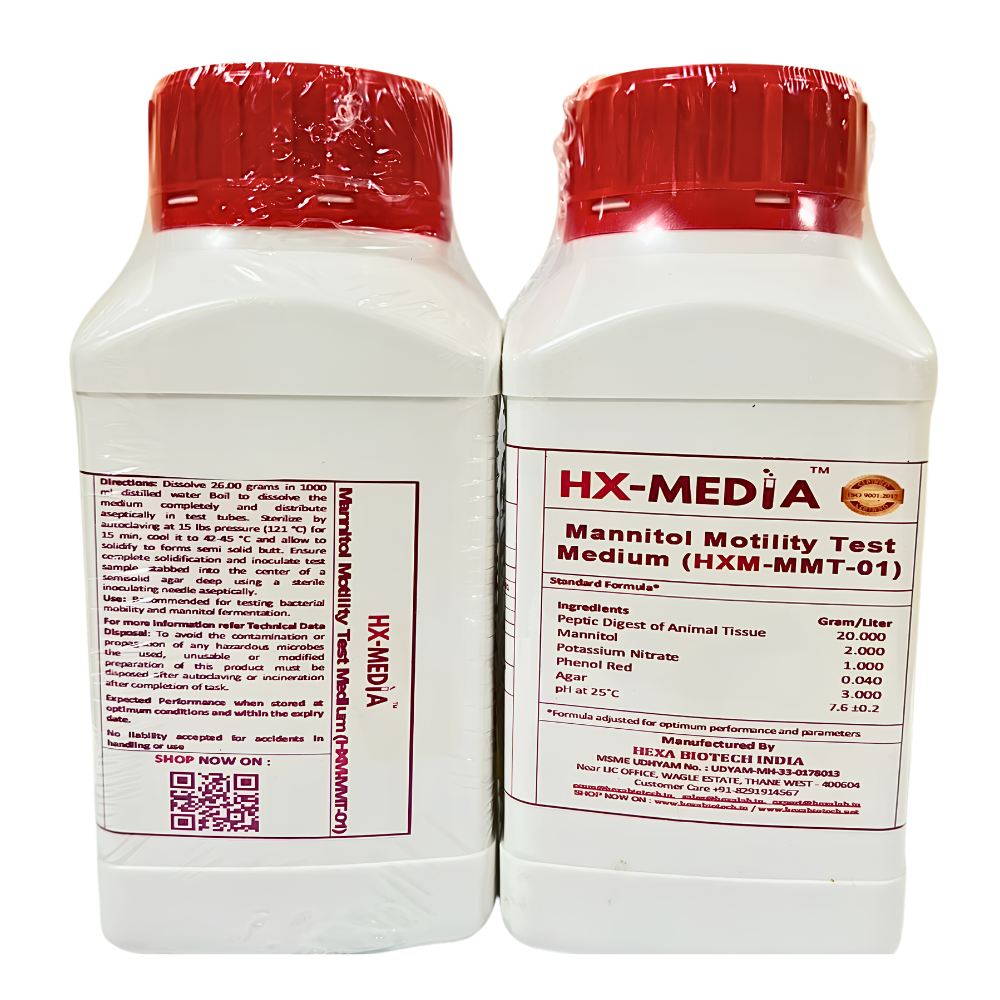
Mannitol Motility Test Medium contains a balanced combination of peptones, mannitol, sodium chloride, a pH indicator, and a reduced concentration of agar. Peptones provide essential nitrogenous compounds, amino acids, vitamins, and growth nutrients necessary for bacterial multiplication. Mannitol serves as the fermentable carbohydrate source, while the pH indicator detects acid production resulting from carbohydrate fermentation. The semi-solid agar concentration creates an environment that allows motile bacteria to migrate away from the line of inoculation, making motility determination simple and reliable.
Mannitol Motility Test Medium is particularly useful for the differentiation and characterization of members of the Enterobacteriaceae family and other Gram-negative bacteria. The ability of microorganisms to ferment mannitol and exhibit motility represents important biochemical properties that aid in bacterial identification. By combining both tests in a single medium, laboratories can reduce the number of separate biochemical procedures required, thereby saving time, labor, and materials.
When a mannitol-fermenting organism grows in the medium, acid is produced as a by-product of carbohydrate metabolism. This lowers the pH of the medium and causes a visible color change in the indicator system. Non-fermenting organisms utilize other nutrient sources without producing significant acid, resulting in little or no color change. Simultaneously, motile organisms move through the semi-solid medium and produce diffuse growth extending from the stab line, whereas non-motile organisms remain confined to the original inoculation track.
Mannitol Motility Test Medium is commonly used for:
Mannitol Motility Test Medium supports the growth of a wide range of bacteria and provides easily interpretable results, making it highly suitable for routine microbiological investigations. The clear distinction between motile and non-motile organisms, combined with the detection of carbohydrate fermentation, provides valuable preliminary information that can be used alongside other biochemical tests for accurate bacterial identification.
Due to its ability to assess two important bacterial characteristics in a single medium, Mannitol Motility Test Medium remains a valuable and widely used diagnostic medium for bacterial identification, differentiation, and biochemical characterization in modern microbiology laboratories.
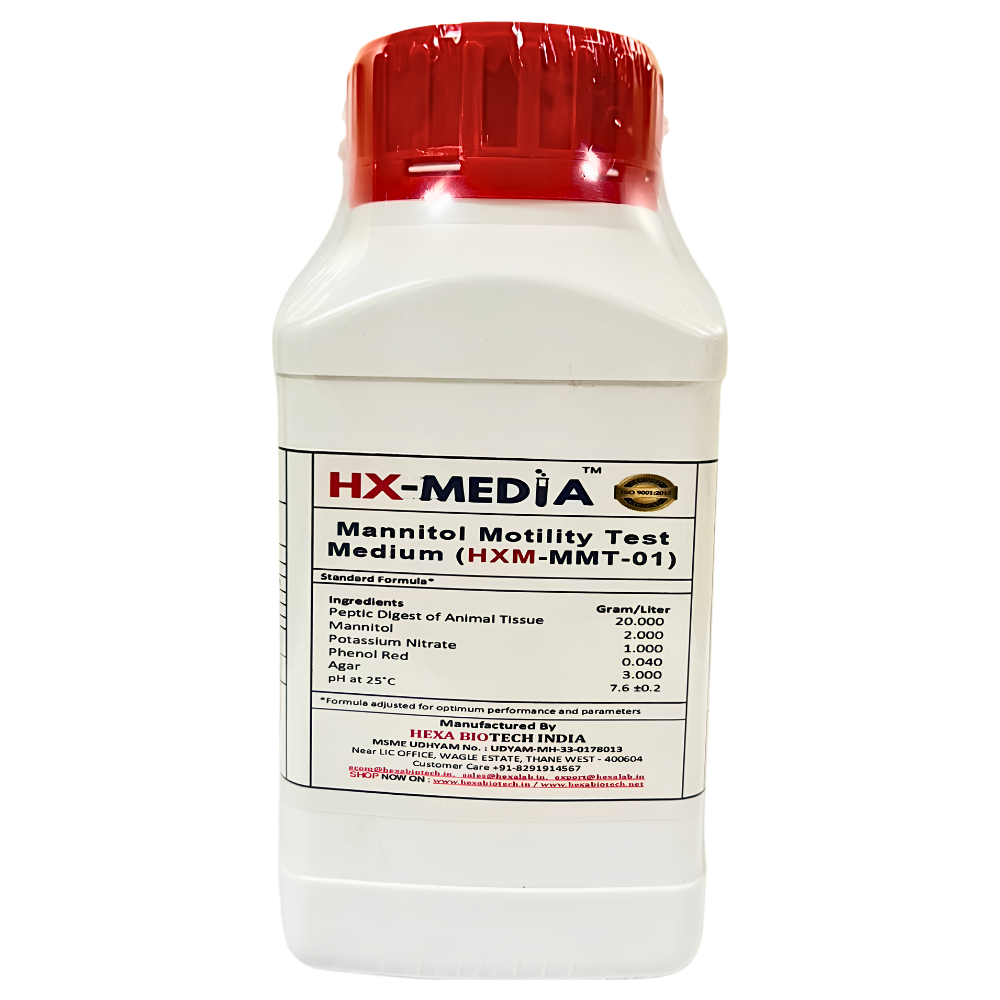
| Component | Quantity (g/L) |
|---|---|
| Peptone | 10.0 |
| Mannitol | 10.0 |
| Sodium Chloride | 5.0 |
| Phenol Red | 0.025 |
| Agar | 4.0 |
Final pH: 7.4 ± 0.2 at 25°C
✔ Clinical microbiology laboratories
✔ Pharmaceutical quality control laboratories
✔ Research institutions
✔ Academic microbiology laboratories
✔ Bacterial identification and differentiation studies
| Weight | N/A |
|---|---|
| Dimensions | N/A |
| Size | 100G, 1Kg, 500G |

₹910.00 – ₹65,120.00Price range: ₹910.00 through ₹65,120.00

₹905.00 – ₹68,960.00Price range: ₹905.00 through ₹68,960.00

₹690.00 – ₹57,440.00Price range: ₹690.00 through ₹57,440.00

₹650.00 – ₹45,920.00Price range: ₹650.00 through ₹45,920.00
Reviews
There are no reviews yet.